
Blog
Insights
Cold Chain AI: The Supply Chain Decisions That Can't Wait for the Morning Report
In temperature-sensitive logistics, a batch compromise discovered at 3am can't wait for a dashboard review at 9am. Why generic supply chain AI fails in cold chain — and what doesn't.
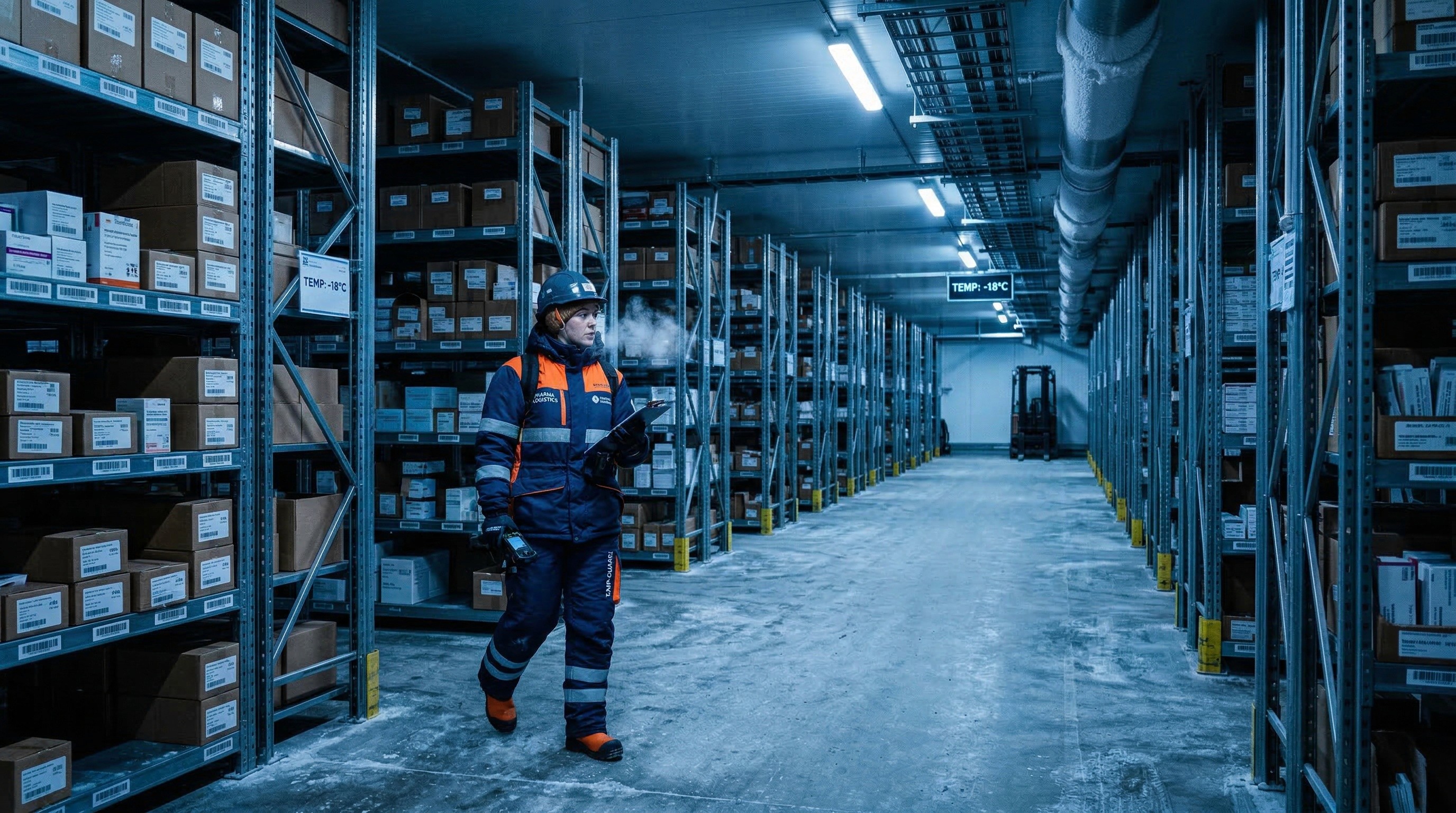
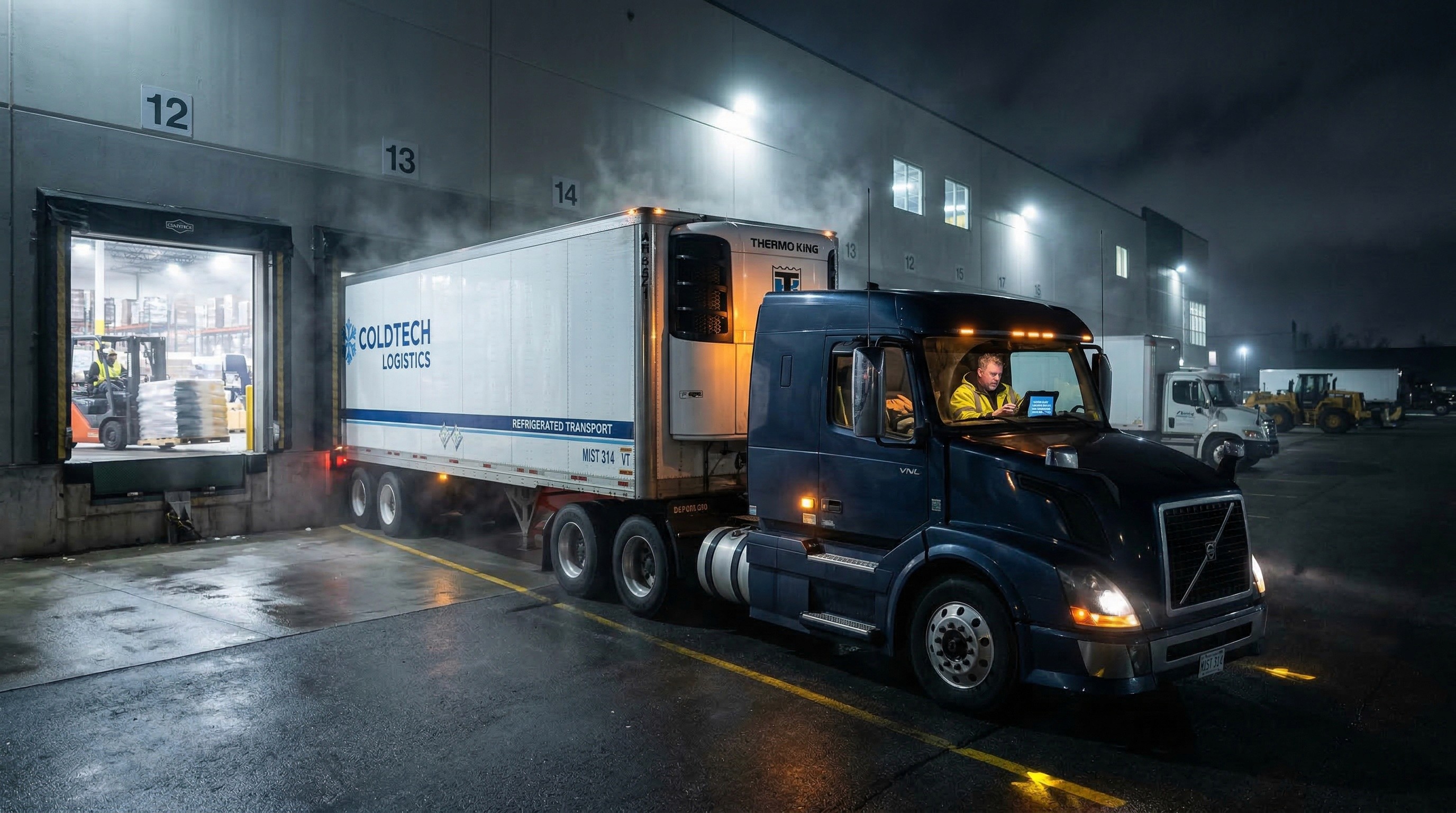
A reefer unit on a distribution truck loses cooling at 2:47am on a Saturday. The ambient temperature inside the trailer begins to rise. The cargo is frozen food, pharmaceutical product, or temperature-sensitive biotech material. The acceptable temperature range is narrow. The window before the cargo is compromised is measured in hours, not days.
In a standard supply chain visibility setup, this event generates a temperature exceedance alert that appears on a dashboard. Someone will see it when they check the dashboard. If they check on Saturday morning. If they're monitoring that dashboard.
By the time a human reviews the alert and decides what to do, the decision window may have already closed.
This is the operational reality that makes cold chain a different problem from general supply chain optimisation. The decisions are time-critical. The consequences of delay are irreversible. And the systems that most organisations use for supply chain visibility were not designed for this.
What Makes Cold Chain Operationally Different
The time window is short and asymmetric
In standard supply chain management, a delayed shipment is a problem that can be resolved after the fact. The goods arrive late, the customer is notified, a replacement is arranged. The cost is real but the situation is recoverable.
In cold chain, a temperature exceedance may make the cargo non-compliant for its intended use. For pharmaceutical product, a single temperature breach can render an entire batch unusable. For fresh food, the consequences manifest as spoilage that becomes apparent to the customer after delivery. For cell and gene therapy - where the cargo is a patient-specific treatment with a defined treatment window - the consequences can be clinical.
The asymmetry is critical: acting on an alert that turns out to be a false positive costs time and resource. Not acting on a real alert can cost the entire shipment.
The data is distributed and siloed
Cold chain logistics involves multiple parties: the manufacturer, the 3PL, the carrier, the cold storage facility, and the delivery point. Each party has partial visibility into the shipment's journey. Temperature loggers record data on-device or upload to vendor-specific platforms. Fleet management systems hold vehicle location and mechanical status. Warehouse management systems hold inventory and receipt data.
Integrating these data sources into a single picture of shipment condition and location in real time is not a problem that most cold chain operators have solved. The visibility that does exist is typically fragmented across multiple systems that are checked manually and infrequently.
Regulatory requirements demand auditability
For pharmaceutical cold chain, regulatory frameworks require continuous temperature monitoring, documented chain of custody, and the ability to demonstrate that product was maintained within specification throughout its journey. This is not optional and not approximate — it is a condition of the product's authorisation for use.
This creates a second dimension to the problem. It's not only about detecting exceedances in time to intervene. It's about maintaining a complete, auditable record of every data point across every party in the chain, in a format that satisfies both internal quality standards and external regulatory requirements.
Where Generic Supply Chain AI Falls Short
Most supply chain AI tools are optimised for planning and routing decisions at a frequency measured in hours or days. They are designed to improve decisions like: which route should this shipment take? How should we allocate inventory across distribution centres? When should we reorder this SKU?
These are valuable questions. They are not the questions that cold chain operations ask most urgently.
Cold chain AI needs to operate at the frequency of the risk. A temperature exceedance that develops over 90 minutes requires a system that is monitoring at a frequency of minutes, flagging deviations as they develop, and triggering response protocols before the cargo reaches the boundary of its acceptable range.
It also needs to integrate data sources that generic supply chain platforms were not built to handle: temperature loggers, vehicle telematics, cold storage sensor networks, and carrier status feeds — all in real time, all with latency measured in seconds, not minutes.
And it needs to operate inside the client's infrastructure. For pharmaceutical cold chain in particular, the regulatory requirement for data integrity and auditability makes cloud-based systems with third-party data access a significant compliance risk. The AI that monitors temperature exceedances and triggers response protocols needs to run where the data lives and where the audit trail is maintained.
The Architecture That Fits the Problem
The cold chain operations that have moved from reactive monitoring to genuine AI-driven intervention share a consistent architecture.
Real-time data ingestion connects temperature sensors, vehicle telematics, and facility monitoring directly into a single operational picture, with latency measured in seconds. Alert thresholds are set below the compliance boundary — the system fires when temperature approaches the limit, not when it breaches it. This is the intervention window.
Response protocols are defined in advance and triggered automatically. When a temperature deviation is detected, the system doesn't wait for a human to decide what to do. It executes the defined response: notify the driver, contact the 3PL's emergency line, identify the nearest cold storage facility, and log the event with full timestamp and sensor data.
The audit trail is built into the architecture. Every sensor reading, every alert, every response action is recorded in a format that satisfies regulatory requirements without requiring retrospective compilation.
And the entire system runs within the client's environment. No data leaves the operational infrastructure. The chain of custody is maintained end to end.
The Broader Implication for Pharma Supply Chain
The ZS CDIO research on pharmaceutical and biotech companies found that supply chain and manufacturing AI is the area where optimism is highest among CIOs: 57% expect results within the next year from AI tools that help reduce stockouts and predict demand.
But the research also shows that only 29% report seeing results from supply chain AI today. The gap between expectation and current delivery is largely explained by the integration and real-time requirements that cold chain and pharma supply chain demand - requirements that most general-purpose supply chain AI tools were not built to meet.
The morning report was never the right cadence for cold chain. The AI needs to be awake when the reefer unit fails at 2:47am on Saturday.
Share
Subscribe for updates
Stay updated with the latest product news and exclusive behind-the-scenes insights.