

Blog
Product Updates
Chat Is Not an Operating Model for Enterprise AI
Why task-driven execution — not conversational AI — is the architecture that actually holds up in production environments.
The problem with chat as the primary interface
Most enterprise AI deployments start with a chat interface. It feels intuitive, flexible, and powerful in a demo. Users type a request in natural language, the AI responds, things happen. It looks like the future.
Then it meets a real enterprise. And it starts to break.
The core issue is that chat optimizes for flexibility, and flexibility without structure creates ambiguity. The same request, phrased differently by two different users, can produce two different outcomes. In environments where those outcomes affect live systems, customer relationships, or regulated processes, ambiguity is not a feature. It is a liability.
Chat proved useful for exploration. It is insufficient for execution.
What enterprises actually need from AI
Consider how decisions actually happen in an enterprise. A procurement manager does not chat with operations to approve a supplier change. They review a request with defined parameters and approve or reject it. A compliance officer does not describe in free text what documents need to be reviewed. They are assigned a specific set of files, a deadline, and a defined action.
The pattern is consistent across industries and functions: enterprise work is structured around tasks, not conversations. There is a defined action, a person responsible for it, a deadline, and an expected outcome. AI that ignores this structure and routes everything through chat is asking the enterprise to work around its own operating model.
This is not a UX problem. It is an architectural one.
Task-driven execution as the answer
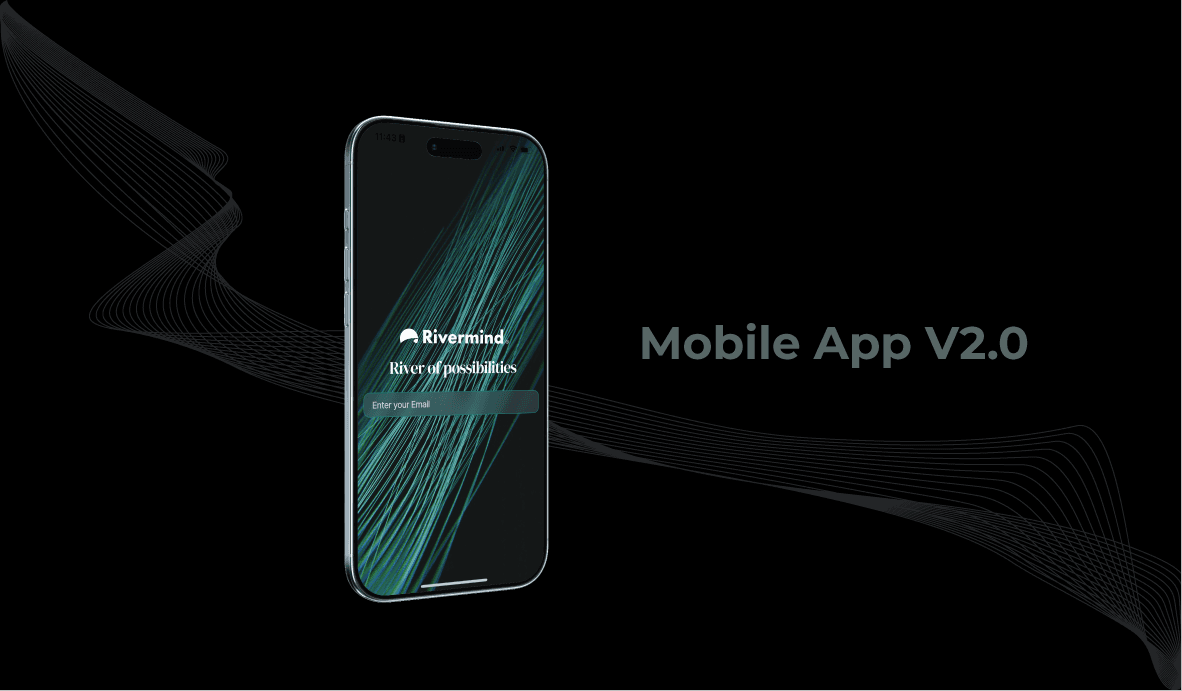
The shift we have made in Rivermind is conceptually simple but operationally significant. Instead of presenting users with a blank input field, the system presents them with a list of tasks — each representing a specific moment where human input is required to move a workflow forward.
Each task is explicit: what is needed, why it matters, what happens after the user acts. When a user opens a task, they are presented only with the actions that are relevant to that context. Once the input is provided, execution resumes automatically. The user does not manage the process. They contribute to it at the point where human judgment is genuinely required.
This creates what we call structured human-in-the-loop design. Workflows pause for humans only when they need to. Everything else runs.
The audit trail is not an afterthought
One of the underappreciated consequences of task-driven architecture is that every human interaction becomes traceable. In a chat-based system, decisions happen inside conversations that are difficult to audit, search, or present to a regulator. In a task-driven system, every input is a discrete event attached to a specific workflow step, timestamped, and attributable.
For industries operating under compliance obligations — banking, insurance, healthcare, public sector — this is not a nice-to-have. It is the difference between a system that can be deployed in production and one that cannot.
AI does not replace human judgment. It captures it, traces it, and continues executing with full context.
Chat still has a role - a smaller one
Conversational interfaces have not disappeared. Their scope has changed.
Within a task, users can ask questions directly related to that task. The assistant understands the context but operates within it — it cannot drift, it cannot reinterpret intent, and it cannot take actions outside the defined scope. This is intentional. Chat explains. Tasks execute.
The separation matters. The moment chat can do anything, users have to think about what it might do. When chat is scoped to supporting a defined task, it becomes a tool for clarity rather than a source of unpredictability.
The operational bar for enterprise AI
Enterprise AI must work for people who are not AI experts. It must behave predictably across hundreds of users, dozens of roles, and operational contexts that change daily. It must integrate into existing workflows rather than replace them. It must be auditable, governable, and reliable under conditions that no demo ever replicates.
Chat-centric AI can meet some of these requirements some of the time. Task-driven execution is designed to meet all of them, by default, at scale.
This is the architecture that holds up in production. Everything else is a proof of concept.
Share
Subscribe for updates
Stay updated with the latest product news and exclusive behind-the-scenes insights.