
Blog
Insights
Predictive Maintenance Promises Were Oversold. Here's the ROI That Actually Holds Up.
The most hyped AI use case in manufacturing. A forensic look at what the real numbers show, which deployments underperform, and the prerequisites for the 20% that deliver.
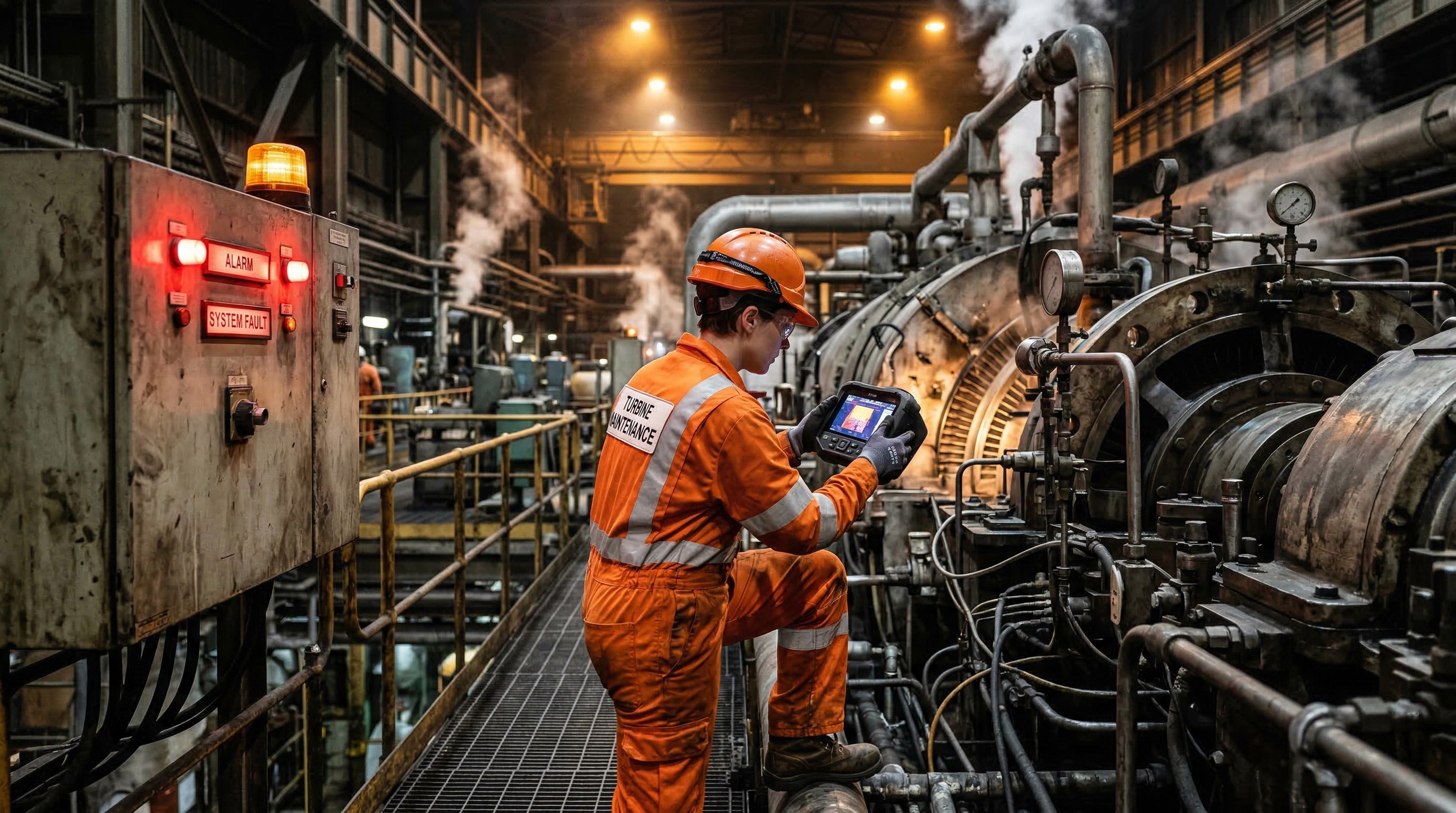
Every AI vendor selling into manufacturing has a predictive maintenance story. The story is always the same: sensors detect anomalies before failures occur, unplanned downtime is eliminated, maintenance teams are dispatched only when genuinely needed, millions of dollars are saved.
The story is not wrong. It describes a real outcome that real deployments achieve. But the gap between the vendor pitch and the median deployment outcome is large enough that executives who have been through a predictive maintenance implementation often describe the experience as disillusioning.
Understanding why requires separating what the technology can do from what the typical deployment actually does.
What the Numbers Actually Show
The manufacturing AI research from Redwood Software found that 60% of manufacturers report reducing unplanned downtime by at least 26% through automation. That is a real and significant outcome. It is also the result of a broad definition of "automation" that includes time-based preventive maintenance scheduling alongside genuine predictive capability.
The deployments that achieve 40-60% reductions in unplanned downtime — the numbers that appear in vendor case studies - share specific characteristics. They have high-quality sensor data on the specific failure modes that cause the most downtime. They have enough historical failure data to train models that can distinguish early degradation signals from normal operating variation. And they have maintenance workflows that are structured to act on model outputs in time to prevent the failure from occurring.
Most deployments lack at least one of these three prerequisites.
The Three Prerequisites Most Deployments Miss
Prerequisite 1: Sufficient historical failure data for the failure modes that matter
Predictive maintenance models learn from failures. To predict that a bearing is about to fail, the model needs to have seen what the sensor signature of a failing bearing looks like in the hours and days before failure occurs. If the maintenance team has historically replaced bearings on a time-based schedule — every 6 months regardless of condition - the model has never seen a bearing failure. There is nothing to learn from.
The implication is that organisations deploying predictive maintenance for the first time often need to accumulate failure data before the model can perform reliably. This is counterintuitive to executives who expected immediate ROI. It is also rarely communicated clearly in the sales process.
Prerequisite 2: Sensor coverage of the right failure modes
Sensor data is often available on the metrics that are easy to instrument — temperature, vibration, current draw — and unavailable on the metrics that are actually predictive of the failures causing the most downtime.
A motor may fail primarily due to bearing wear, which is detectable via vibration analysis. Or it may fail primarily due to insulation degradation in the winding, which requires electrical signature analysis. Or primarily due to contamination ingress, which requires oil analysis. The sensor portfolio that exists on most plant floors was designed for process monitoring, not failure prediction. It often does not cover the failure modes that matter most.
Deployments that succeed invest in sensor selection based on failure mode analysis before they build models. They ask: what causes our machines to fail? Then: what sensor data would give us early warning of that failure? Then: do we have that sensor data?
Prerequisite 3: Maintenance workflows that can act on model outputs
A predictive maintenance model that fires an alert 72 hours before a predicted failure is only valuable if the maintenance team can respond within 72 hours. If the maintenance scheduling window is two weeks, the alert is academic.
This is not a technology problem. It is an operational problem. Predictive maintenance requires that maintenance planning be flexible enough to accommodate condition-based triggers alongside the time-based schedule that most plants run. It requires that parts inventory be available to address failures that were predicted but not yet on the scheduled maintenance plan. And it requires that maintenance technicians trust the model outputs enough to act on them — which takes time and a track record of accurate predictions to establish.
The Use Cases Where ROI Is Most Predictable
Across deployments that have achieved and sustained significant ROI, a pattern emerges in which use cases deliver most reliably.
Rotating equipment with well-understood failure modes - pumps, motors, compressors, fans — where vibration and temperature signatures of degradation are established, historical data is available, and the cost of failure is high. This is the highest-confidence predictive maintenance use case, and it is where the 40-60% downtime reduction figures are most achievable.
High-consequence single points of failure - assets whose failure causes line stoppage, where the cost of an unplanned outage is orders of magnitude higher than the cost of a scheduled intervention. The ROI calculation is straightforward: the model only needs to prevent one or two failures per year to justify its cost.
Assets with long lead times on spare parts - where the value of prediction comes not from avoiding the failure itself, but from having enough warning to source the parts before the failure occurs.
The Realistic Expectation
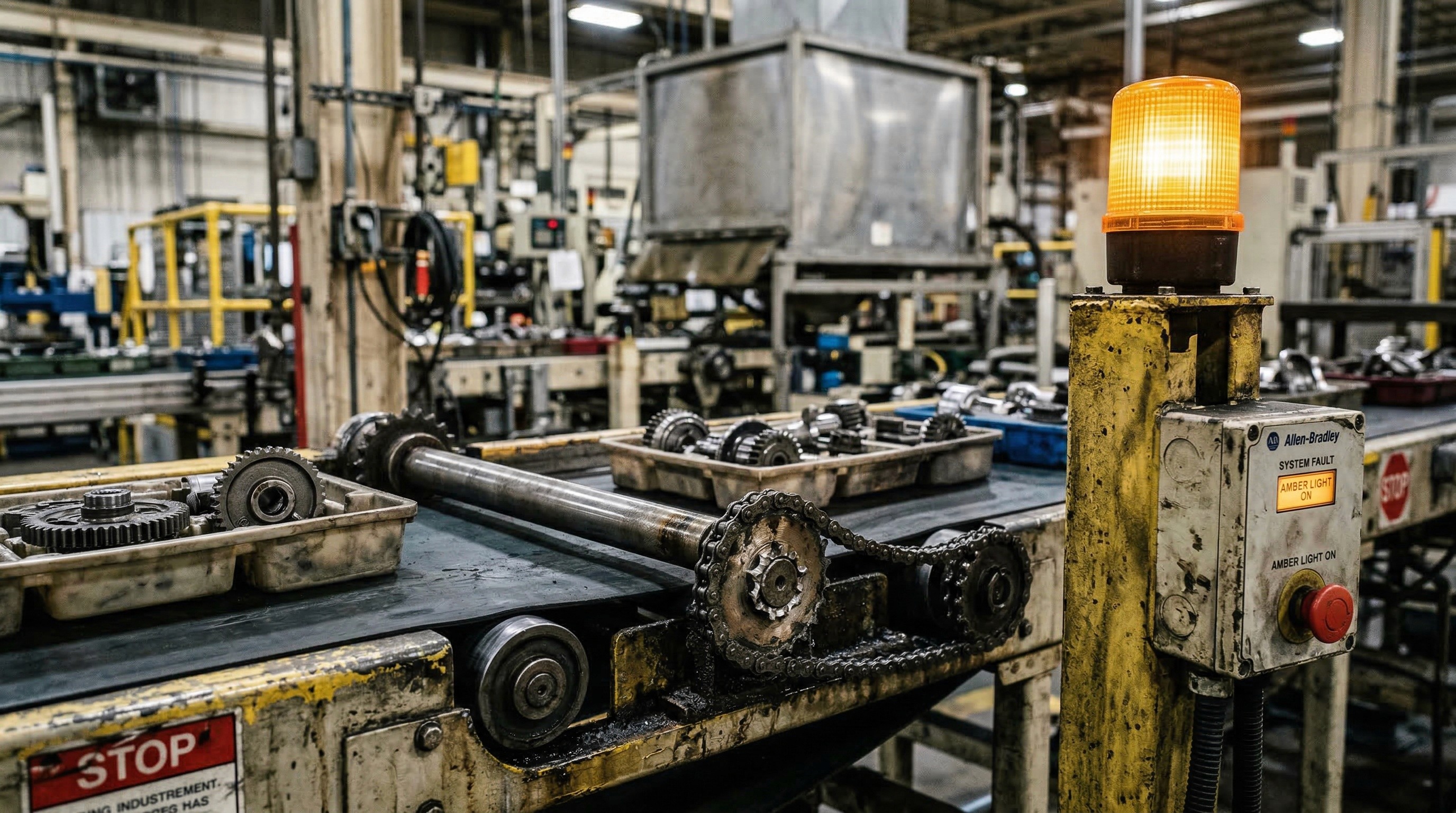
Predictive maintenance works. It does not work everywhere, immediately, with any sensor configuration and any maintenance workflow.
The honest ROI case for a new deployment is typically built around a specific set of high-consequence assets with known failure modes and available sensor data. It starts with those assets, establishes a track record, accumulates failure data for the cases where the model performs well, and expands incrementally to other asset classes as the data and operational integration mature.
The deployments that fail are usually the ones that try to instrument everything at once, use existing sensor infrastructure regardless of whether it captures the right signals, and expect models to perform reliably before they have seen enough failures to learn from.
The technology is not the constraint. The data and the operational readiness are.
Share
Subscribe for updates
Stay updated with the latest product news and exclusive behind-the-scenes insights.